A response to a technophile

This post is a mess, an amalgam of several yet-born posts swirling about.


This is a tool, made by Takeshi Yamada,  an artist who saw visions while surveying horseshoe crabs on the shores of our bay.

It is a pen crafted from the tail of a horseshoe crab. Mr. Yamada uses it almost every day, to create stunning images.

Compared to some tools, his pen may be thought inefficient. It certainly lacks the precision of a YAG laser engraver , or even a Koh-I-Noor 5611 drafting pencil, but that's not the point. That's not the point at all.

Mr. Yamada is human, with the same frailties as any of us, with the same natural curiosity. He did not learn to use his telson in an American school. There is no place for it there.

Credit: Dennis B. Smith, Leadholder.com
Unique does not guarantee better. Unique things are often unique because they are not worth reproducing. Technology thrives on precise, efficient, reproducible results. There is little room for Mr. Yamada in the industrial world.

Mr. Yamada's work, however, gives me pleasure. His work pleases others as well. Someone shared it with me, now I share it with you.

***

Gerald Aungst, "a supervisor of gifted children," writes for Connected Principals, a shared blog written by school administrators, a blog well worth visiting. His recent post "Why 'I Don’t Do Technology' Isn’t Acceptable" raises some good points, and I have no qualms with the thesis of its title. His arguments within the article, however, reveal some interesting thoughts shared by many technophiles, and I'd like to offer some views from the other side of the aisle, an aisle I straddle with my Google + account in my right hand, my Dixon Ticonderoga No. 2 pencil in my left.

Go read the post. I'll go check my sundial and pick weeds from my garden while you read.

***
"Some people argue that technology is simply a tool to be applied where and how it’s appropriate. Others say no technology is neutral and we have to be deliberate in our choices to use it."

The two are not mutually exclusive--"appropriate" covers a lot of ground. We also should consider what is lost when a newer technology is used. Reel mower vs. gas-powered rotary. Pencil vs. pixels. Chalkboard vs. IWB.

I'm a retired doc--before I stopped succoring the afflicted I saw the mess high tech mania produced in medicine. Mr. Aungst's example of the CT machine is an interesting example, because of the quandaries it has created, and because of the change in skills that have resulted.

Classic appendicitis (and many subtle variants) can be diagnosed by history and physical exam alone if the practitioner has learned how to do this. CT scans are quite useful in certain situations, but are often superfluous, and can, at times, mislead. They certainly tangle up a few DNA molecules (which are usually repaired), and they are very expensive.

The obvious downsides to CT imaging is that it takes time (and time is an issue with appendicitis), and it requires tossing some radiation through a living critter. Less obvious is the erosion of skills in tech-dependent docs. By the time I left medicine, CT scans were evolving from an overused, nonessential tool to standard of care, partly because the less experienced docs felt no need to refine the clinical skills needed to accurately diagnose appendicitis--because they had CT machines....

High tech has supplanted the low tech history and physical examination--if you delve into the luverly world of Bayesian statistics, you start to grasp why this matters. I loved CT machines--but I used them judiciously. No, you do not need one just because you hit your head. But thanks for asking....

***
"Everything that we can do using digital technology can certainly be done in some other way. As I understand it, technology gives us three capabilities: to do things

  • More efficiently
  • More precisely
  • More thoroughly"

Well, no, and no. Some things done with digital technology cannot be done any other way. I'll save that for another post. The second part, though, intrigues me because it gets a deeper question. Why the hurry?

Given the phenomenal information now (efficiently, precisely, thoroughly) available to all of us, does pedagogy require the same technical sleekness? Do our classrooms need to follow the industrial model of production? Is this even possible? The Slow School movement makes a nice counter-story to the frenzy spawned in Silicon Valley.

If you believe that our current cultural practices have had disastrous effects on our seas, our air, our children, maybe stepping back a bit to reflect on what matters, itself not a particularly efficient activity, then efficiency loses its luster. If we took the time to reflect on our practices, to appreciate the depth of consequences we make with our choices, would the shimmering cognitive dissonance awaken us enough to change? Or would it drive us back into the dull din of relentless data, back to our coffee and wine and the digital distractions of our [dis]connected lives.

 "Why you'll love a Mac. A Mac is as good as it looks."


***
"Technology advances give all of us—doctors, forensic scientists, teachers, and students—the ability to make better decisions...."
This is where our paths divide. "Better decisions" is a huge category--and "better" is as slippery as butter. The large cultural decisions we have made (or have had pressed onto us) the past few generations have had consequences, huge consequences.

Our current air of Western superiority is fueled by cheap calories pumped up from the ground, from finite sources. Our tremendous gains in growing food stem from our ability to fixate nitrogen through the Haber-Bosch process, also dependent on finite sources. We have the time to ruminate, though few of us do.

The same technology that allows us to chat with our "neighbors" half a world away allowed a British "Reaper" un-manned drone to kill civilians in Pakistan using digital communication from an airbase in Nevada. Yes, it was an accident. It wasn't the first time--two children were injured via remote control in 2009. No, it won't be the last.

High tech allows us to make quicker decisions--but if technology makes us capable of better decisions, I'd like to see the evidence.

***

At the end of each school year, I take over a hundred kids to see horseshoe crabs mating along the Sandy Hook Bay. While a few critters may end up frustrated by coitus interruptus sophomoribus, a few humans leave the tide's edge feeling a little bit more connected to the world, and, perhaps, a little bit more in love with the world.

Some of them may end up in Afghanistan, the ones least likely to find it on a map. The Japanese call the horseshoe crab kabuto-gani--"the warrior's helmet"--because of its similarity to the headgear worn by the samurai, a culture that forbid killing by stealth.


We don't dwell on these things, those of us protected by money and class here in the States. They make us uncomfortable.

Teaching science requires some cognitive dissonance, which is convenient, because allowing a child to become more aware of her universe will lead to huge doses of cognitive dissonance. If I aim for efficiency, the children in my class can hide from their dissonance.

Mr. Aungst's article and the subsequent discussion are a wonderful start to why technology matters in the classroom, and who can disagree with his assertion that "educators have accepted responsibility for the growth of the students in their care."

I think we need to discuss what "growth" needs--deeply, slowly, thoroughly, if not efficiently. We'll need some technology--comfortable chairs, maybe a glass or two of something brewed, perhaps a guitar, and artificial light if our chat extends past sunset. We mostly need ourselves and our love for what we do.

Care to join the discussion?


The Mac is from the Apple site.
The pencil is accredited above.
The telson pen is from Horseshoecrab.org.
The horseshoe crab photo is ours.
READ MORE - A response to a technophile

Artikel contoh pemrograman sederhana update status facebook sosial network

Kebanyakan para user pemula menggunakan status generator (statusgen), untuk membuat aplikasi yang terintegrasi dengan facebook untuk bisa mengupdate status via hp, kakus, wartel, telepon rumah, blacklabel, jackdaniel, chivas regal dll
Lucu-lucu ide-ide mereka tersebut. Membuat kita bisa sejenak tersenyum melihat alamat dari mana mereka mengirimkan status. :D
Contoh update status dari pasar wage purwokerto

http://ping.fm/sscLJ

#tag facebook artikel pemrograman internet FBML science technology
READ MORE - Artikel contoh pemrograman sederhana update status facebook sosial network

Unintended consequences: King Ludd was right

Natural science has a funny way of bumping up against high tech. While we are way past the point of  rationally discussing whether we'd be better off without automobiles, industrialized agriculture, or Auto-Tune (I'd vote against all three), not all high tech gadgets are irreversibly entrenched in our culture.


King Ludd--waiting for rain to wash his hands
 
Hands-free sinks have always annoyed me--I like being able to alter the water temperature, and I have a bad habit of setting my papers down on the sink's edge, with predictable consequences. They make sense, though--less touching, more sanitary. The last thing a hand touches before turning on a bathroom sink may be a less-than-pristine orifice.

Hospitals have spent oodles of dollars installing the sinks for this reason. Nosocomial (hospital-acquired) infections are a huge expense, and despite occasional evidence to the contrary, hospitals want their patients to get better.

Alas, turns out the money may be wasted. A Johns Hopkins study shows that automatic faucets may increase risks of nosocomial infections; the fancy valves used in the high-tech sinks serve as breeding grounds for Legionella bacteria.

As a result, "hospital leadership elected to use traditional fixtures – some 1,080 of them – in all patient care areas in the new clinical buildings currently under construction at Johns Hopkins’ East Baltimore campus." Yep, they're removing the high-tech fancy doo-dad sinks and replacing them with, ahem, traditional fixtures.

How many high-tech devices in the classroom truly improve education? 


Maybe if they look at the morbidity from cars, they'll consider removing the parking lots, too.
READ MORE - Unintended consequences: King Ludd was right

My Google-approved, high-tech, zomgilicious overhead projector

We have interactive whiteboards in our classrooms. They are relatively expensive, and a real pain in the arse if you're left-handed, especially if there's any delay in the projection. (This may not seem obvious, go ask a southpaw...)

The Amish do not have anything in particular against technology, but they do have issues with anything that separates the community. Much of modern technology does just that.

I am not opposed to high tech in the classroom, but I am opposed to tech that is no better than what it replaces, especially if it's more expensive. There are some things I can do with a blackboard that cannot be done with a whiteboard, and the interactive whiteboard, despite its flash, is more restrictive than my whiteboard when I am helping children learn how to think.

On a recent post, I wondered aloud about the use of the word "bitch"--I think it's offensive, many young folk disagree, and a brilliant young adult who happens to work for Google sent me a chat given there by Randall Munroe, the author of xkcd. The talk is fascinating, of course, but even more interesting (to me, anyway) was how Munroe illustrated his work. He used an overhead projector.


It was a fancy camera over an oh-so-cool desktop, but still, it was, in essence, an overhead projector.

I still have an overhead projector, and I still have acetate, but I have not used it, mostly because I cannot hear anything over the fan. I have a camera I use just about every day, projecting various objects on the board as the students wander in to class.

And now I have a Google-approved, high-tech, zomgilicious overhead projector--I simply aim my camera at a piece of paper, and I write. The writing gets projected onto a whiteboard where I can scribble some more. Students can scribble on their own whiteboards, or they can scribble on mine. ("Mine" gets less obvious every day in my class.)


Phenology notes for myself: first ospreys seen diving for fish on Saturday, April 9;
the cormorants are back, the loons have yet to leave.

Randall Munroe screen shot from video cited above.

I still think the word is offensive, so I deleted the original xkcd cartoon 

Sorry, Amanda, I just found your letter--it got stuck in the spam section.
READ MORE - My Google-approved, high-tech, zomgilicious overhead projector

On classroom technologies


“Young students and old thrive on the tactile experience of manipulating with their fingers. And I definitely appreciate being able to interact with the content – how could teaching and learning get any more hands-on?”


Our fry are getting bigger--some have migrated to mini-aquariums set up by students in recycled milk and soda bottles. We have a few more wheat plants forming heads, and a student announced that her sow bugs had babies.

We got a lot going on in class.


There's been a huge push to get "technology" in classrooms--I'd argue that a recycled plastic milk bottle holding two tiny fish and a strand of elodea counts as technology, but no one gets rich selling used milk cartons.

***


I am not averse to new technologies. I have a class set of netbooks (thank you Roche/BEF/Home & School!),  an interactive whiteboard, and a couple of remote devices, including a Mobi. We use them as well as pencils, paper, and cut shower boards. The students slide easily from one tool to the next, depending on the task at hand.

Most of our newer educational technologies involve recorded sight and sound--filtered views of the universe. I am inundated with catalogs that offer written words, videos, simulated labs, and models.

When a child "interacts" with a SMART Board, she is touching a flat piece of plastic, no matter what a specialist tells us.


The more I try to bring the world to my classroom, the more I realize the limitations of our various tools. Even words get in the way at times, especially when the words are designed to "teach." Words matter, of course, and sharing language gets us halfway there--but in science class, or in any interaction with the natural world, words fall incomplete. We forget this.

We do not live in a "knowledge economy," we live in the world. We eat other organisms, we breathe oxygen released by plants, we drink water that has passed through other critters. We need what our world provides; we are, literally, part of this world.

Our words are not.

I will continue to use our classroom tools, high tech and low, as scaffolds to the world that exists, but I will continue to remind my students, and myself, that our tools distort our views.

This past week a saw one child sticking his nose into our class bag of dirt, smelling the impossibly complex and living collection of stuff found in soil. He liked it, told another, and he took a good whiff as well.

Can't teach that. Not with words, with pictures, or even a new MacBook Pro with a 2.3GHz Core i5 dual-core processor and Thunderbolt technology. Unless, maybe, if you dunk it in mud first.


Photos from classroom.
READ MORE - On classroom technologies

Back to the future

With all the clitter clatter of folks rushing to toss out last week's toys for the new and improved 2.0 version, here are a few things now obsolete, but well worth bringing back:


1) Chalk
You cannot draw well with markers; it's even harder to draw with an interactive whiteboard. Subtlety matters. While a 256 color Powerpoint of a beating animated heart garners plenty of woo factor,

It's cheap! A dozen chalk sticks will run you less than a dollar; the same number of erasable markers costs a magnitude more.

It's therapeutic--snapping a piece of chalk in two satisfies the amygdala. Try breaking a marker in two. If things get really bad, you can eat the chalk as an emergency substitute for TUMS.


2) Overhear projectors
Using an overhead projector well requires a strong grasp of the material you are presenting. It has the added bonus of allowing you to face your students, your visage lit up eerily like a bad scary movie.

An overhead projector is a great source of light for biology teachers--I still dig one out when I want to show that chlorophyll fluoresces, or to test light's effects on oxygen production in plants.

(I won't even get into my talent for shadow puppets....)


3) Analog clocks
I still have no idea why they left--an analog clock gives more information than the digital variety, hands down. I guess you could argue that they cost a smidgen more--I do have to invest in a new battery every 3 or 4 years--but even I can spare a dollar or so a year.


I do not hold onto the old for old times' sake. I hold onto tools that work well, until replaced by something that works at least as well, everything else being equal.

Spending a lot on an interactive whiteboard does not make you smart, only your wallet.


Don't eat the chalk. Really.
Einstein photo from Seattle Weekly here.


READ MORE - Back to the future

A response to a technophile


Whenever I post about the ludicrousness of using tools at inappropriately young ages, I get animated responses with similar themes. These replies are often anonymous, and often thoughtless.

I got one from my previous post that was neither anonymous nor thoughtless, and I thought it was worth carrying the discussion out in the open. Thank you, David!

Computers are the most powerful tool we have at our disposal and you want our kids to be ignorant of how they are used?

"Computers are the most powerful we have at our disposal" is dubious at best--I'd argue that the power of the tool depends on the task at hand (try hammering a nail with a mouse--yes, I'm an idiot).

But let's suppose for a moment that the computer is indeed the most powerful tool we have. Is its innate "power" your argument for why young children should be taught how to use them?

My car is the most powerful way for me to get around, but I'd rather the children keep away from the wheel until they can peer over the dashboard.

Do you think kids' parents, most of them anyway, have any clue how to use a computer as a tool?

Yes, I do, insofar as they need them for what parents do day to day, which is to say, live.

To be fair, they use computers every time they drive, use a microwave, an elevator, a video game, or EZ Pass, each a different task.

Maybe I am misunderstanding the thrust of your question. I do that a lot.

If you mean more esoteric stuff, like designing a database from scratch, well, maybe not. We got high school for that. I'd rather teach the kids how to bake from scratch--as in here's a bag of seeds, bake me a pie in 9 months, but I tend to be a bit extreme.

We do spend too much time in front of computers, this I agree with.
How do we fix this? I cannot control what happens in the child's home. What is the damage done by this? Are we contributing to the damage by reinforcing the activity in school?

However, what's the difference in health between sitting with a computer in front of you, or sitting with some paper to take notes? In either case, you are sitting instead of moving.
A great question--there's a couple of distinct points there, and I'll take each in turn:

Neither has great risks aside from physical inactivity that we know of--I suppose you could stab yourself in the eye and get paper cuts with the pencil and paper, and there have been case reports of children causing damage to their thighs from prolonged contact with hot laptops, and more than a few visits to the ER after tripping over wires, but I know those are not what you mean.

Some real longterm concerns may exist--two big ones in the past, monitor radiation and carpal tunnel syndrome, have been ameliorated. Longterm exposure to light may be a subtle issue not adequately explored, but again, I know these are not what you mean either.

There is a difference, though--a child pursuing an activity on paper has only the paper to deal with. Paper is mostly quiet unless you rustle it, and doesn't have flash or sizzle or anything else except sit there. It has, alas, no bling.

A child, when not doing her paper homework, will get up and do something else wrestled to the ground by an adult, both of which expend energy. A child on a computer wanders away, too, to online games, to FaceBook, to ESPN, to a whole shiny digital world that distracts her like a magpie.

The real crime is the number of physical education programs which are being cut and the lack of outdoor education programs in most schools.
Here in New Jersey, physical education remains mandatory. Getting kids outside is, indeed, important. There are only so many hours in a day. If we both agree that children are spending too much time on computers and not enough time outdoors, well, it doesn't take a computer to mesh out a rational solution to that.

I agree completely, by the way, with Stephen Downes 10 things that you really need to learn. I work in a school where those 10 things are our primary curriculum and our content is secondary to them.
Do send a link to your school--while I am blessed to work in a great department in a wonderful school, we still have the state curriculum and an annual end of course here to contend with.

And yes, I accept emails.


That's King Ludd in the picture--I assume it's old enough to be PD.
READ MORE - A response to a technophile

Electric version of Lamborghini

If you're going to drive green,then why settle for some little bug of a car, when you could drive a drop-dead gorgeous vehicle like the Lamborghini Minotauro?Ya the concept of developing a electric car of Lamborghini version have been on work.
The vehicle has three seats and four computer controlled motors that split 70% of the car's power to the rear and 30% to the front.


Triangular air intakes cool the battery and sound mufflers channel noise from the motors behind the sportscar.
Let's hope this one makes it past the concept stage.Lamborghini isn't a cheap one to afford,that you all know..
READ MORE - Electric version of Lamborghini

Charging CellPhone with your Body Heat

Its a lot of research going on ,how to reduce energy consumption to the devices and How we can invent a new way of generating Electricity that run our devices..!!Samsung Fascinate Android Phone (Verizon Wireless)
Its a new invention,that a Phone which uses any source of heat from your body heat to a radiator to keep your cell phone charged.

What make this work..?
It have an integrated thermogenerator which converts heat into electrical energy to keep the phone running.Every single micro degree heat of your body can be surprisingly used and conerted to electrical pulses.
Car Charger for Apple iPod iPhone 3G 3GS (White)
Hmm..nice ,so whats yep..? take out phone from your purse and keep it in pocket for charging..!!
READ MORE - Charging CellPhone with your Body Heat

your grandma can now instant message you

Why this post..?
Its time to get connected with all of our family.....!!!Ya i'm sayin all of your family!!
we mostly spend time chatting,instant message on popular sites like facebook,orkut,twitter with friends,and sometimes with strangers but we dont communicate with our family ,to mean exactly our grand ma,grand pa...who if dont know to use computer to send you a messages..is that the real fact that separate you from your beloved one..?

Many of our parents and grandparents, who don't use computers,have to depend on telephone calls from you to communicate with.This is not the situation they have to be..here is a invention for you ,that could provide a solution for with a new technology arrived that can read text hand-written on papers and then it convert it as a html message to your desired mail id.
What is celery..?
The All new Celery looks like a printer machine and operates like a fax machine.
celery,grand ma,fax machine,printer,invention
You just feed your text message written on a paper..!!

celery,grand ma,fax machine,printer,twitter,facebook,instant message,invention

It get what u inserted n convert it to HTML and send it to your beloved ones..


celery,grand ma,fax machine,instant message,invention
                                                (this child is pretty happy reading her Grandpa's message..!!:) )


Not only can you send HTML messages, but you can send color photos in JPEG, RTF, GIF, TIFF, or PDF email attachments.The interesting news is that the Celery even support for RSS feeds, blogs, Twitter and Facebook.(isn't it enough for ...)
What it offers n its cost..?
Currently the Celery is sold  for $99.95.Firststreetonline.com
They offet users free for the first month,later on which they can subscribe to  black and white or a color monthly or yearly service.

Hope This Technology will be more useful..!!
may me if it comes to INDIA,its sales will reach the peak..u got it what i mean..?
Like it..!! share it !! or leave a !! comment !!
READ MORE - your grandma can now instant message you

Simple Socket to conserve Energy

A new gadget


If you are going out somewhere leaving your mobile in charging,and yep you can't say when you will be return back..
so,upto then your mobile will be in charging even if its get fully charged,so why to waste the energy.....?

Here comes the new socket which will probably conserve energy and your gadgets too..

The socket plugs in between the wall and your gadget; tap the button on top of the plug to start the power flow. After a user selectable 30 minutes, 3 hours or 6 hours, the thing shuts off.You can use it for any electronics , rice cooker,heater,charger,and many other things you can add up.


new invention,gadget,electronics,socket,save energy


electronics,gadget,socket,save energy


If you like it,or have something in mind ask it..or pass by comment...!
READ MORE - Simple Socket to conserve Energy

A Bee can Detect your diseases

You might have heard of dogs that can detect diseases in humans beings.Thats the word you can say it for bees too,ya ,now bees can also be trained to do it too.

We know Bees have good sense to smell anything,with this fact in mind researcher Susana conducted to smell Human air using Pavlov's reflex, bees can be trained within minutes to detect specific disease-revealing odours in people's breath.

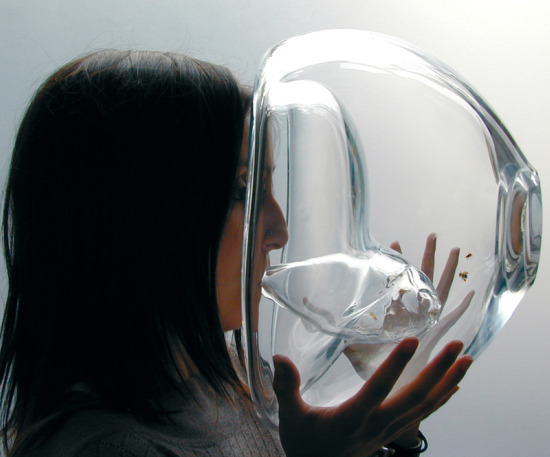
Susana Soares has developed a strange-looking glass apparatus that you breathe into, while bees in a separate section of the bowl react to what they smell
bee fly,sniff,detect diseases,glass,apparatus,susana


Just if we breathe into Susan's Strange looking Glass apparatus,bees that kept inside the separate dept can detect your body medical conditions like lung and skin cancer,tuberculosis and even pregnancy.

Since our honey-making friends learn quickly and travel long distances with ease, they might someday be called upon in fture to sniff out bombs and landmines,too..
READ MORE - A Bee can Detect your diseases

Chainless Bike with steel rope

A Hungarian design team has unveiled a new chainless bike, powered by steel wires,You can take along with you to anywhere as its easy  to disassemble and can be reassembled  for touring or racing.

string bike,chainless,steel rope,bycycle,new technology,engineer,hungarian
The “Stringbike” uses two steel cables instead of Chain(we are using in ordinary bike) attached to pulleys, which move on swinging kidney-shaped discs as you pedal. The discs replace a traditional round gear system, and you can install different discs depending on your needs, according to the Web site Hungarian Ambiance.The video may explain the concept.

The position of the pedals determines the position of the discs, so that they swing in opposition
we can say it,with both pedals on your foot ,one is always pulling the bike forward, while the other lags behind.This allows the pedal creates easy transmision ,and the ride a full of fun and excitement.
READ MORE - Chainless Bike with steel rope

Flying Micro Robot can fly more effectively


Micro Flying Robots Can Fly More Effectively Than Flies

robot,flying robo,insect

Engineers have long been working on in their attempts to fabricate micro aerial robots that can able to match the amazing flight capabilities of nature’s most advanced flying insects ¾flies. Such robot flies,if they could be made seffective enough means that could be used for a various useful tasks, from spying, to mine detection to search and rescue missions in collapsed buildings.The scientists had tested this with many experiments to know how much energy it consumes..?
based on the results they have found that, during lift of it took little more strain (low speed) and while it flies i ts design of the blade like what a helicopter have,make it move faster and consumes only 50% power.


It made engineers to develop further that can revolutionise the Micro-Robo Technology.
READ MORE - Flying Micro Robot can fly more effectively

Converting sound waves into Electrical power that power your phone

Do you want to charge your mobile phone,but dont have electric power at that time..? while you are talking to your girl friend..?
sound waves,talking,phone,energy,generate
                          
Can you imagine,i'm talking about the mobile itself which act as a electric power generator..!!! funny to hear..?

Ya It's possible that in the future your voice conversations that have sound waves can be converted into electrical signals within your cell phone that could generate enough electrical power to run the phone, without the need of a batteries.

And not only just phones. This technology, which converts mechanical stress like vibrations into electrical signals,could power more range of similar products or sensors.

It was by Texas researchers, who discovered that by building a certain type of piezoelectric material to a specific thickness (about 21 nanometers, compared to a typical human hair of 100,000 nanometers), you can boost its energy production by 100 percent.
electric waves,phone,signal,generate energy

Nowadays most of Mobile devices and wireless sensors rely on batteries, and which the battery technologies are relatively heavy and expensive too. So-called "energy harvesting" technologies can convert one kind of energy, such as vibrations or solar rays, into electricity.
READ MORE - Converting sound waves into Electrical power that power your phone

Robonaut to help Astronauts

robonaut


So far we have developed Robots for doing crtain jobs within our Earth,there will be a day where ROBOTS will help in Space also..
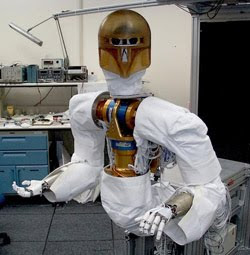
The News was said by Officials of NASA and General Motors which they have come together to develop the next generation dexterous humanoid robot.They named the robots called Robonaut2.Robonauts were designed to use the same tools as humans, which allows them to work safely side-by-side with humans on Earth and also in space,which R2 is more featured than R1 which already introduced...

robots,robonaut,space
robot,space,help
READ MORE - Robonaut to help Astronauts

Technology even a Luddite can love


Just a quick peek in--it's the beginning of the year, and things are lovely, with the exception of a very local, very sad loss that will remain both local and sad--Bloomfield is a true community. We miss you, Michael.

***

A few fish moved in this morning, a lot of roly polies will soon follow. I've brought back my wooden flute, seeds, a rattle back, a huge horseshoe crab shell, and a variety of other tchotchkes that make a science class a science home.

But that's not why I write.

Social media gets expensive--I buy this, I sign up for that, and before I know it I've frittered away both hours and money on shiny things that I will never use. My wife thinks I'm a magpie.

Even a stopped clock, however, is right twice a day. Some twit dude named @fnoschese tweeted something about using plain vanilla whiteboards in class. No batteries. No lights. No code.

And only $2.

I'm cheap. I'm a neo-Luddite. And I like shiny things.

When I tutor one-on-one, I love using scrap paper. I scribble, the student scribbles, I scribble some more, the student scribbles some more. When we're done, I offer the pile of scribbles to the student. Usually the pile is tossed.

I cut up two 4 x 8' white shower boards ($25.87 including tax) into twelve 24 x 32" white boards.

Best money I've spent on a classroom, and I've spent a lot.

Mistakes are no longer permanent red marks. A quick swoosh with an eraser or back of a hand, and the board is clear.

Mistakes do not simmer for a day or two; I walk around and we work together to fix misconceptions
on the spot.

I know
immediately where the students stand, a bit humbling when you realize maybe your brilliantly scripted lectures posed as directed discussions are no more effective than the textbook you sneered at with your fellow twits on late summer eves.

And (drum roll please....) the kids dare to think. I mean think as in "Look at me I'm coming up with solutions and I want to share them!" think.

I am not saying anything Frank Noschese doesn't already say more succinctly on his blog Action-Reaction.

The only downside? Fresh cut shower whiteboard smells like a wet dog for a day or two. I only had one student complain, but my wife made me keep the boards in the trunk until I got them to school.

Two freakin' dollars. My Smartboard could have paid for a thousand of them. My Smartboard isn't bad. My Luddite boards, though, are better.

Did I mention cheap, too?


Photo by Adrian Pingstone, released to public domain.
READ MORE - Technology even a Luddite can love

Difference between PSLV and GSLV

All we know what is PSLV and what is GSLV even not known in depth,you might know something about it...isn't it.

,so
Do you know what it differs between PSLV and GSLV..?
so many terms there in short,we can say
-the diifferent stage of boosteres
-the thrust it generates
-the fuel capacity
-the engine adaptivity
-orbital positions
-hight upto which it can place satellite..

Oh,,so many considerations la...to know exactly,the
Most important factor
  
GSLV,image,satellites
GSLV
PSLV ,images
PSLV


 In the PSLV, we first ignite the core motor and the vehicle lifts off. Then the strap-on motors are ignited.
 In the GSLV, we first ignite the four l iquid strap-on motors and check them for performance. After a gap of 4.6 seconds, the core solid stage is ignited. This gap is to confirm that all the four strap-on motors have developed the required thrust.

The difference between PSLV and GSLV is basically the GSLV have Cryogenic Engine and whic can develop more thrust (than PSLV) and it can consequently take heavier Satellites to above 36000 kms above our Earth.
READ MORE - Difference between PSLV and GSLV

Alfie, Arne, Charlie, and Mumford

It's July--the sun still reigns, but as it slips slowly away, sordid disorder slips in. Gardens get weedy, wasps a tad touchy. June fools us into thinking entropy is an illusion.

July cures illusions.

***

I am reading both Alfie Kohn and Lewis Mumford this week--Kohn's The School Our Children Deserve and Mumford's The Myth of the Machine. Kohn paints a lovely picture of what is possible, Mumford explains why we do it wrong anyway:

Once automatic control is installed one cannot refuse to accept its instructions...for theoretically the machine cannot allow anyone to deviate from its own perfect standards. And this brings us at once to the most radical defect in every automated system: for its smooth operation this under-dimensioned system requires equally under-dimensioned men, whose values are needed for the operation and continued expansion of the system itself.

Human autonomy has become a quaint idea.

***


Arne Duncan, the quintessential Organizational Man, was predicted by Lewis Mumford--he does what he does to keep the machinery humming.

The sad thing is that a lot of folks, culturally accepted sociopaths, do as Arne does. Joyce Irvine, an effective principal by all accounts, was fired this week to keep the machine humming.

“Her students made so much progress.
What’s happened to her is not at all connected to reality.”
Jeanne Collins, Superintendent of district
***

The good news is this--if you treat children as "humans now" instead of as "workers later" they do as well on the standardized tests as those who get the drill-to-kill treatment, perhaps even better.

I'm busy constructing a constructivist classroom. I'm risking my career on Kohn's words and research. I'm hoping my children become happy, thinking adults.

And I pray I never have an Arne Duncan clone give me credit years later as the driving force in his education.
READ MORE - Alfie, Arne, Charlie, and Mumford

Are you too edu-conventional?

I've been spending too much time eavesdropping on edutech conversations--I'm having oral surgery in less than a week, and Twitter provides a diversion that allows me to pretend I'm actually doing something.


"Every child MUST tweet! Blog! Skype! Wiki! Ning!"


While much of it involves bleating and breast-beating tweeting, some gems break through. Bud Hunt and the EC Ning Webstitute are both gems.

Bud Hunt opened up a Google doc to the world today, and posted the following questions:
  • Who is in your circle? Your network?
  • Who's listening in?
  • What's worth talking about? What's worth sharing?
  • How are you purposefully and transparently modeling learning in your work?
  • How are you being purposeful about the behaviors and habits you model?
  • What "productive eavesdropping" are you engaged in, or helping to foster?

Guess which two questions jumped out at me.

What's worth talking about?
What's worth sharing?


This is the heart of learning, of teaching, in both PD and in the classroom. We create a lot of noise when we fail to address these questions first.

These are scary questions--not so much because of where they lead us, but because they expose what we have not been doing. If we cannot answer these questions faithfully (and I use that word deliberately), we are stealing time from our students.
They're should be a place in Dante's Circles of Hell for those of us who mindlessly teach.

These are the essential questions of education, and require a level of intimacy that leaves us exposed. Works great with the right partners, disastrous otherwise.
What's worth talking about?--For all the chatter we generate on Twitter, Delicious, Ning, Facebook, or whatever else passes for community these days, not a whole lot gets said.

What's worth sharing?--We are all pretty good at bookmarking. Oooh! Look here!!!! We're all pretty good at sharing (and borrowing) ideas. We're too quick to get lost in all the shiny objects without asking whether its worth our time.
Collaboration between folks responsible for educating children will require an intimacy that should make us blush. We are exposed, splayed open for others to see. This is hard enough even in the best of circumstances. Even a good marriage leaves behind a road of hurt and repair.

And we're expected to do this with strangers, in 2 night stands in far-away cities, sleeping in strange beds. We drink too much coffee in the day, too much alcohol at night. We leave with the rush of early love, lusting to get back to the classrooms with our new ideas. We live in a fantasy world for 3 days, where everyone believes everything is good and possible.

And then we wonder why our evangelism falls short. We return to our districts, where good people have worked hard for a long time, gray-haired and tired, leery of change.

Don't tell them everything, don't share everything--just share what is worth talking about. What happens at EduMashTechCon 2.43a stays at EduMashTechCon 2.43a, most of it anyway. As frustrating as that is as the techno-pioneers ride back home into their districts, most of what you think is valuable might not be.

If the only thing you share are things worth sharing, you will always have an audience.


Painting is the Great Orator, 1944 by Irving Norman, via Poor Leonard's Almanack.
READ MORE - Are you too edu-conventional?