In Irene's aftermath

The sandpiper did the unthinkable--it strolled. Then stopped. Then sat at the edge of the ocean. I was sitting a yard or so behind it. It did not matter. This bird is done.

Hurricanes are exhausting.

***

We're more intricately tied to nature than we care to admit. We do a pretty good job denying death and denying age, our little pleasure machines adept at creating the illusion of a perpetually orderly universe.

I write out a word--say "maple"--and the branch I swung from as a child still feels as lithe in my hands, though that branch turned brittle and broke decades ago, its essence long turned back to carbon dioxide and water, gone long before the most recent hurricane, but still vivid in a word.

I do not know how much fear a sandpiper feels sitting exhausted by the edge of the Atlantic, a sandpiper that may only exist now as a word--"sandpiper"--forever etched in my brain, "forever" itself a human conceit. It's carcass now lies just below the tide line, nibbled on by crabs and snails.

When we teach science, we must be wary of our worship of our words, our models, our abstract representations which become more real than the ground under our feet.

The point of science is just that--to look at the ground beneath our feet, for whatever it is, as it is, or as best we can tell what that is is.

If our feet leave the ground, and we chase our conceits instead of the dirt, we lose a chance at something bigger. Scientists know this. So do good poets, of course. Neither get a fair hearing in schools.

We spend so much time deflecting what's true we lose our grip on what matters.

There are a lot of ways to get there--John Steinbeck was a better observer than I'll ever be. The point of biology is not to learn vocabulary any more than the point of reading Steinbeck is to learn sentence structure. The point is to get to what matters.

You might see it in the fading light of a late August sunset a day after a hurricane watching a sand piper rest its weary body on the wet sand. You might hear it in the dying voice of Johnny Cash singing "Hurt." You might smell it in the decay of an early September breeze.


You'll know when you get there.


Your students will, too.


READ MORE - In Irene's aftermath

Zeitgeber matters

We keep time in class, as we do pretty much everywhere. We pretend that days are exactly 24 hours long, and that each hour is as well proscribed and linear as he next. An hour in December lasts exactly as long as an hour in June.

Kids know otherwise, of course, at least until we train them.

We start school here in Bloomfield next week. The daylight hours shrink dramatically this time of year. A week from now we'll have almost 20 minutes less daylight than we'll have today. In a month, we'll have an hour and 20 minutes more darkness. The light we do get will be more oblique, less intense.

Science teachers will make a big deal about this, explaining the seasons using globes and lamps, but if we've taught our children that sunlight does not matter, that the clock matters more than your hypothalamus, that we eat at noon, not when you're hungry, well, then, we should stop feigning shock when children really don't pay much attention to sunlight.

None of the adults around them do, either.

If college graduates do not know why seasons happen, or how trees accumulate mass, or what forces act on a basketball in flight, maybe it's not because our children refuse to learn.

Maybe it's because they internalized what we've been teaching them all along....


New leaf--if more than a few children are truly uninterested in a topic, and I have no good reason to push them, drop the topic.

READ MORE - Zeitgeber matters

Intelligent curriculum design?

When anyone suggests that we not teach evolution in school, he is suggesting that we not teach biology, and in a broader sense, science.


So let's be more frank about the discussion--do we teach science, or something else pretending to be science (which reduces science to superstition), or skip the whole thing entirely?

(And no, technology doesn't count--I can teach a child how to put together an automobile without her understanding much about combustion or friction or the basic laws of Newtonian physics.)

READ MORE - Intelligent curriculum design?

Science and the art of Perrymandering

I could be a Rastafarian, a witch, or a Hindu. Maybe I'm a Jainist, a Buddhist, or a Scientologist. I might worship the sun, the moon, or maybe even both.
'

As a science teacher, it matters not a whit.

And here we have potential future Presidents insisting that Intelligent Design belongs in my science class.

I spend a lot of time defining science, more time than many, but it's time well spent. If you have no idea what science is, then either learn or, well, clam up.


Truth be told, I'm mostly a pre-Constantinian primitive Christian, who happens to be confirmed a Roman Catholic.  
Which is not a Fundamentalist--not even close.
But thanks for asking
.

Image lifted from MoveOn.org.


READ MORE - Science and the art of Perrymandering

A Clockwork Yellow

If you want to make an apple pie from scratch, you must first create the universe.
Carl Sagan

I think clocks did as much to squash our spirits as anything else, but the history of time is fascinating, and surprisingly silent given its effects on our culture.

When the Prague Orloj astronomical clock was built, raw materials needed to be churned into the metal parts used to make the massive machine, some of which still exist today. People go to visit it, to take pictures, to, in a word, worship.

The beauty of the rhythm of the universe marked by the clock has been usurped by the idea of the clock itself. An abstract form that takes the concrete form of the clock has become another idol.

And we love idols.
***

What do we value in science classes? What does a child learn about the universe by Skyping with astronauts, by playing with remote telescopes via the internet, by doing simulations of labs on an iPad?

If a teacher does not have the wherewithal to teach about combustion using nothing more than a candle, a match, and a bell jar, an iPad will not help.

Teaching science simply can be stressful--there is simply no place to hide. I can teach about combustion using a chemical equation, balancing the reactants and products with flair, as though that's the point of chemistry, using animated demos to show various colorful molecules combining and breaking to form various new substances. And I used to do just that.

Now I start with water seemingly cast from a lit propane torch.

Which is the point, really--here is a piece of the universe, child, here's what we see. Let's figure out if we can find a pattern here.

Teaching combustion going to the equations first is like teaching someone how to look at a sunflower by analyzing Fibonacci spirals:


Until a child sees the beauty of the sunflower for itself, its powerful symmetry easily seen but not so easily defined without numbers, no sense pushing golden ratios.

The school awards the children who can manipulate the Fibonacci ratio. It's easily tested, and easily mastered even without seeing the symmetry in a flower head, should a child be so motivated. In school, we idolize the abstract.

A child could know the golden ratio without grasping the beauty seen in nature's symmetry, and do just fine in science class.

And so folks go to gawk at a clock in Europe, designed to reveal patterns discovered by humans hundreds of years ago, taking pictures of a machine with little machines, understanding how neither works, nor caring to. And they will show off their photos as we show off our clever students who spout off ratios, and wonder why we feel an ache in our chest as we drift to sleep, feeling that something is not quite right, that something is missing.


I keep a sundial by my classroom window.


Golden ratio image lifted from Sofluid here.
The sunflower is by lucapost released and borrowed under CC via Flickr.
Prague clock by Hector Zenil, via Wikipedia, used under CC.

READ MORE - A Clockwork Yellow

Quakers

I am glad today was not a school day in New Jersey.

Those of us sitting on the state's udder, the tip of Cape May county, got a nice ride for less than we'd pay at Morley's, and countless afternoon chats under the sun made the surreal feel real.

Now imagine if we had school tomorrow--kids would be assaulted with seismographs, joule calculators, fault maps, Richter scales, and whatever else tools teachers could find to make the real become more abstract.

All that matters, at some level, of course, but for most kids, I imagine having a spectacularly lovely August afternoon off to replay a minute's worth of otherworldliness will make this one stick for a long, long time.

Leslie and I went for a nature walk afterwards--the monarch butterflies are back in force, the dolphins were feeding off the beach, a fawn played peekaboo with us, and we saw a hummingbird sitting on a branch. I saw an ibis grope through the mud, a muskrat waddle its fat August body through the reeds, and hundreds of dragonflies shimmered around us, showing off their magnificently colored bodies, only rivaled by the porcelain berries we saw on the trail.


Earthquakes matter because we have infrastructure. Get outside, under the summer sun, and they matter a whole lot less.

I wish the same could be said for hurricanes.


The porcelain berries photo by Josconklin, used under CC.
READ MORE - Quakers

Seine thoughts

Went seining yesterday with my brother and my niece, dragging our net along the edge of the Delaware Bay looking for whatever.


We found lady crabs, spearing, a croaker fry, lots of comb jellies, a  blue claw, a few hermit crabs, and a horseshoe crab molt.

We were looking for nothing in particular, and we found it. A few kids and their parents joined us--looking for nothing in particular trumps searching for something specific on a fine August afternoon.
***

School starts again in a couple of weeks.

Schedules. Bells. Curricula. Because that's the way it's done.Because it's efficient. Because it's orderly. Because we have to. Because we need control.

It's not how we learn, though, and never has been.

Several children felt the wiggling of minnows in their hands yesterday, the weight of warm, gooey comb jellies, the snip of crotchety crabs. It's unlikely they will seine in school, even in biology class.

And that's a shame.


You can get a decent  4x8' seine net and a pair of oak poles for about $30.
It will outlast the laptop you bought your child last week.
If taken care of properly, it might even outlast you.


The woodcarving from Sea Fishing by John Bickerdyke, 1895


READ MORE - Seine thoughts

Breaking down biology

Thermodynamics started out as steam punk physics, but now explains, well, everything.

There is a non-trivial element of faith the the Second Law of Thermodynamics, one we dance around when we toss the idea of the Big Bang around in science class. Every time there's an energy exchange in a closed system there's less useful energy available to do work--and that's the natural world in a nutshell.

Everything eventually falls apart, drifts to a state of uselessness.


From The Onion,


If students spent any time delving into the implications of that, they'd go from the nutshell to the nuthouse. Instead we toss serious equations at them, with serious sounding names for all the serious parts, and we got them playing in abstract la-la land, which is a fine place to be in you've studied physics for years, but a psyche-killer for the neophytes.

How did the energy get packed into a point billions of years ago? We have a don't ask, don't tell policy.  That kids blithely except the concept of the universe contracted to a point just assures me no one's really paying attention.

My goal this year? Get them paying attention.


So here's my question for the more experienced out there. Would it be crazy to design the biology course around the Second Law of Thermodynamics, starting out each class every day with a brief discussion of how energy transformations guide everything in biology?

Evolution is the Big Daddy of Biology--should I spend as much time on Grandpa Entropy?


I'm not going to lie to you--first time I saw this photo I thought it was a real protest. Things have gotten that crazy.

Photo lifted from The Onion--where else?
READ MORE - Breaking down biology

On nothing in particular

Students seem amazed that the idea of "0" as a number is a relatively new concept, but students also see "0" as a numeral, as solid and inevitable as a "3" or a "7"--as most of us do. How could zero be invisible to the Greeks? (It wasn't, of course...but we only think so because we misunderstand our own concept of "0".)


XKCD rules!


That's not how we use it, though, at least not most of the time in the simple measurements or arithmetic we use in class. Zero serves mostly as a placeholder.

Take the number "306"--the "0" means there are no chunks of tens beyond those already captured by the three hundreds signified by the "3". We have 6 units, true, not quite enough to form a chunk of ten, so we need a way to show this: 3_6.

This is glaringly obvious to many of us who grew up without electronic calculators. The calculator we occasionally used in elementary school was the abacus, which requires grasping the concept of placeholders in order to manipulate the beads, and the slide rule, which requires the use of mental placeholders to make any sense at all.


If you do not grasp the very real difference between zero and the other nine digits, subtle problems arise, which become not so subtle when playing with significant figures ("sig figs"), those numerals that carry any real meaning when we apply math to the natural world.

We too often teach sig figs as a set of rules, which make little sense if the student has a poor grasp of zero, which many--through no fault of their own--do. The rules seem arbitrary and arcane, when, in fact, they define the limits of numerical reality when we measure the natural world.

"Numerical reality" comes off a bit too abstract. I should rephrase this: significant figures define the limits of observable mathematical relationships found in the natural world. The relationships are real, inasfar as they can be measured by independent observers. In class, however, sig figs become an exercise in futility for many.

I think it gets down to the zero. Electronic calculators add a level of abstraction to numeracy, leading to the ridiculous assertion science teachers hear at least once a week: "But my calculator says..."

And indeed, the calculator says exactly what it's supposed to say, when its operators plug in numbers without any feeling for what they represent.

And how could they? The Greeks had the concept without the symbol. We, alas, now have the symbol without the concept.


Yes, I know, the Mayans and Indians and Phoenicians and on and on and on had it down pat.
Thank Fibonacci for getting it to the western folk.


XKCD comic used wtihin his guidelines--very broad ones at that. Thanks! 

And yes, the sig fig rules are a tad arbitrary--range of error makes more sense.

READ MORE - On nothing in particular

August light

The tomatoes came from a farm within a stone's throw, the eggplant from our front yard. Our neighbor two homes down gave us the flounder he caught within a couple of miles of here. The basil got plucked from the backyard patch. The peach melomel came from local honey and peaches brewed under our roof a year ago, with help from a local vintner when I ran out of yeast nutrient. I biked over to the Cape May Winery, and he shared what he had.

This is how humans made it before the industrial age, when we depended on this year's sun, this year's crops, and this year's kindness.

Leslie's secret to her cooking in August--keep out of the way of the ingredients.


***

The sun went as far north as it's going to go, and is now sliding back, picking up momentum day by day. The bees know this, more frantic now as they store their honey. The plants know this, shedding captured calories into the fruit we call vegetables.

Food is good, food is abundant in these parts. We eat, and we put some by.

We'll freeze tomatoes and basil and beans. We'll ferment peaches and blueberries and honey. We'll collect seeds and store them in brown paper bags, in the pantry closet, until the creaking light of February prompts us to start sowing again.

***

By February, I will be diving into ribonucleic acids and adenosine triphosphates with kids who will be diving into McDonald's as we defrost last summer's pesto. McDonald's is cheap, and McDonald's is, to many, tasty.

A year ago I grew a batch of basil in class, eventually making a batch of pesto. I offered to share it, but my students were shocked I'd eat something we grew in class.

We are so disconnected from our earthy roots that even food has become abstract.

Biology, or any science for that matter, is not abstract. Oh, the models can get a bit wacky, and just about all of them are wrong here or there, but none of them come from thin air. Our hypotheses are human inventions, true, but our conclusions are not--our ideas are weathered by the natural world, by reality, by an uncertain sense of truth.

We eat, we breathe, we shit, we pee--pretty much all animals do. You can get through formal education all the way to a PhD and not have even a vague notion of how life works, how matter is transformed, and energy caught.

August is the month of accounting--the solar feast wanes, do we have enough to survive the winter? For most living things on this part of the world, the answer comes in a slow unraveling, as mitochondria are no longer fed pyruvate, as another life ends beneath the snow, silently, held in ice until the feast resumes in March.

And what do we offer the nascent adult? A diet of DNA, ATP, and ribosomes, a subcellular abstraction that answers nothing that matters to a child just starting to shave.

I hope to fix that....


And while we're at it, food is not energy.
P.S.: Perseids tonight!
READ MORE - August light

Stars and storytelling

I've been immersed in the new esocial culture the past week, even carried around an iPod for a couple of days. I wandered down to D.C. for the march, then back up to NYC for #edu140.

I saw incredible visionaries seduce their audiences with words, with music, with movement, with touch. I mainlined social media for several days, dizzy with various boxes of multiple colors, floating on a collective stream of human consciousness, and last night I crashed.

It took two words from my son as we got out of the car at 2 AM this morning: Look up!

The milky way streamed over our head, parting around the Northern Cross. Ancient patterns of stars raced through my brain--not just the neocortex, the part we worship, but arcing through the limbus, the edge, the old mammalian brain, the home of desire. The hippocampus, our ancient compass, screamed for recognition, finally allowed to guide me under something I deeply recognized, something beyond human.

The amygdala, our kernel of fear embedded with wonder, ripped my attention away from my neocortex--words dissolved, language did not. The stars spoke to me, as they do to any mammal wending through night's shadows.

We forget, or maybe the human part of us, the folds upon folds of new cortex that allow us to navigate in our human world, forces us to look away. But the neo-cortex is only part of the story, and not the one that will save us.
***

Astronomy, until very recently, was a story told only of light, but what a story we created. We learned of suns and stars, galaxies upon galaxies, of an expanding universe by creating layers of inferences, stories upon stories, based only on light.

Helium, named for the sun, was discovered on the sun before we found it on Earth, betrayed by its spectral lines.

How many of our children know this? How many adults?

Science is not "knowing" that the sun holds helium--to say this is not to say much, though trivia often passes for science in our culture. Science is grasping the stories of light, of spectral lines, of inferences, and then sharing the stories with others.

If children knew how tenuous our grasp of the universe is, as we try to hold hands with the shadows dancing on the walls of Plato's cave, they'd be a lot less frightened of science teachers, and maybe more frightened by our stars at night.

Fear is underrated.
***

While the stories of science are based on tenuous grounds, the stories are solid. They work, much as the stories we shared before we had written language, as we gathered under the stars on moonless nights, worked for us then.

The children of my ancestors 50,000 years ago had the evidence above them, they felt the creeping dread of the amygdala tempered by the guidance of the hippocampus. Their stories were based on evidence, the evidence of the stars, not the words of a textbook, the words of an expert.

We have become a nation of magical thinkers. I wish I could say this was despite our science education, but too often it is because of it.

For decades now, we have dropped observation of what's real for immersion of what's not--words and photographs and monitors and videos are not real. No media today can hope to capture the sky that wrapped its way around my nonverbal brain just a few hours ago.

If a child uses a computer before she uses a magnifying glass, her science has been stunted.
***

I proctor the BHS Sidewalk Astronomers, a school club that lets kids see a tiny piece of the universe, catching photons in light buckets we set up on the pavement outside our school.

I used to apologize for the poor viewing conditions, but most have never seen truly dark skies, and are thankful for every photon they catch with our telescopes.

The telescopes are easy enough to grasp--you can see the big mirror bouncing light to the smaller one, you can see the eyepiece glass focus light as you slide the tube up and down with a simple knob gear.

No magic involved.

 ***

Cell phones are magic, iPods are magic, wifi is magic, even televisions are magic to most who use them.

I can at least show children how speakers work, using nothing more than a paper cup, a coil of wire, and a magnet, but do not show them how the amplifier that drives the speaker works. (The last time our class made a speaker, it literally went up in smoke, a great lesson in vibrations, sound, and heat.)

I'm done with magic. I'm done pretending we can survive as a culture pushing magic.
  • Magical thinking is what leads rational adults to believe that plugging an electric car into a socket makes the energy "cleaner." 
  • Magical thinking is what leads a culture to putting more calories into the ground than can be extracted from its harvest.
  • Magical thinking is what leads us to believe that we are beyond the laws of physics, that human western wisdom is beyond our collective wisdom, that our minds can solve any problem our brains manage to create.
I'm going to teach my students the first week of school the difference between the magical and the true. I am going to encourage them to catch me every time I slip into magical thinking. We're going to spend a lot of time delving into why their science teacher, despite himself, keeps slipping into the world of magic.

We will learn what's true together, and if a child should escape our haze of urban light and stumble under a sky burning with stars, she will have enough trust in what's true to trust the stories they tell, and have told, since before we uttered our first word.

I'm done with magic. Magic is limiting. Magic kills thinking, kills hope, kills people.


Perseids woodcut via NASA but from 18th c., so I figure it's OK to use.
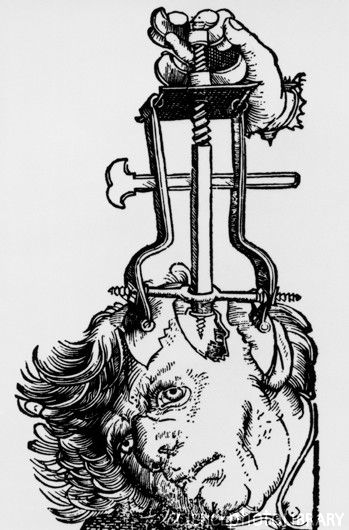
Book of Wound Surgery of Jerome of Brunswick (also called Brunschwig) published 1497, via Science Photo Library, but also ancient enough to skip the legal nonsense.
READ MORE - Stars and storytelling

Horseshoe crab graveyard

 Horseshoe crabs and I have a long history.
 Theirs longer than ours.


These were tossed up on a huge hill of dredge waste, peering through the gray mud.


I have witnessed much, most unspoken, in my years, as I am sure you have, too.

I do not understand, or trust, my silence.


Their blood runs blue, copper grasps the same oxygen molecules that let us strip electrons from our food.
 Our blood runs red, the deep rust of iron, 

Most of us can see, most of us can talk.

Our stories remain as opaque as the mud deep below the waters of the Delaware Bay, where now in the darkness, a solitary horseshoe crab consumes a careless clam, neither ever seen by humans.


They have not changed much in hundreds of millions of years, their life perfect for their world.


And now they rest on the spoils made by us, we who are impossibly foreign in our own skins, looking for something beyond this life.


When you walk the fissured hillock on a chilly April morning, the exoskeletons whisper what they know.


This is all, and all is enough.


Photos taken by me.
READ MORE - Horseshoe crab graveyard

Elementary science: playing with fire

Fire is obvious, so it seems. Pretty much every child recognizes the flame of butane lighter is the same as the flames on the stove or on a lit candle.

A child sees that a fire makes solids things smaller. The grown-ups tell children that fire consumes, that the logs burned up, that fire reduces things to ash.

And pretty much every adult who believes this still lives in the world of alchemy, hoping to turn lead into gold.

My September sophomores know what fire is, no surprise, since September sophomores know everything there is to know about anything.


Before I ever say the words respiration or calorie, I ask them about fire—a few look confused (a good sign in science class), but most give me a knowing smile—they know what it is, they “just can’t put it into words” and when they do, they describe the properties of fire. Not a bad start.

I ask them what you need for a fire, and they know that—fuel, oxygen, something to light it—somewhere in elementary school they learned about the fire triangle.

I then pretend to take out a box full of pure oxygen, and ask them what would happen if I lit a match in it.
***

Most of my sophomores know the photosynthesis/respiration equation before they get to my class:

C6H12O6 + 6O2 => 6CO2 + 6H2O with energy released
Sugar + oxygen combined releases carbon dioxide and water
CO2 + H2O => C6H12O6 + O2 with energy captured

The kids love writing down equations, it gets them feeling all sciency, and now the stupid teacher isn’t asking stupid questions about stupid fire expecting answers that “can’t be put into words.”

The inevitable “Do we have to know this?” comes from the back corner of the classroom—always the same back corner—but I pretend I don’t hear.

I hold up my propane torch—even the back corner crowd notices now. I promise them I will light it in a minute, but they have to answer a simple couple of questions first. What do I need to make it work. (“Well, duh…”), and what is H2O (“Well, duh…” with an advanced eye roll).

I write the equation for the combustion of propane on the board—it’s similarity to the respiration/photosynthesis equations is glaringly obvious, but not a point I care to make at the moment.

C3H8 + 5O2 => 3CO2 + 4H2O

I ask what comes out of the propane torch after the propane as the propane is burned. I consistently get two answers—fire and carbon dioxide. I never get water. I’ve asked hundreds of kids the question, with the equation sitting up on the board, and it’s like H2O is some mysterious stuff stuck to the equation just to make it balanced. The stuff is pretty mysterious when you get down to it.

After our list of stuff that comes out of the torch is made—usually CO2, heat, light, flame, and occasionally propane—I light the torch.


I pass the torch over a cool piece of glass—it could be a large beaker—then pass it over the cool stem of the faucet. The students see the flash of water vapor on the glass. They know it looks like "fog” — but no one wants to say it. It makes no sense. Water from fire? It must be a trick.

To be fair, it pretty much gobsmacks me, too, each time I do this.

And of course, water does not come from fire—it comes from the hydrogen in the propane and the oxygen in the air. Turns out we’re all closet alchemists. We cannot accept the obvious.

***

Chemistry hit puberty  when Antoine LaVoisier realized that fire consumes nothing—it only transforms. If you figure out the amount of stuff with and compare it to the stuff you end up with, it has the same mass.

Exactly the same mass.

All the heat and light and noise that escaped from the dancing flame took nothing away. Energy has no mass, no inertia, no stuff to it. It's not nothing, but it's not mass, either.

So what do we teach a young child about fire? Let them observe a candle, let them see the water rise from the flame, let them cover it with a glass and see the flame die, let them wonder.


Matchstick photo by Sebastian Ritter via Wikipediaa under CC.
READ MORE - Elementary science: playing with fire

Stuff matters: more thoughts on elementary curriculum

Many children (and quite a few adults) don’t think of air as matter. It’s invisible, seemingly immune to gravity, has no taste, makes no sound. When you light a match, it burns up and disappears into “thin air.”

This is a problem.
***

The stuff of matter, the stuff of stuff, seems simple--we mostly rush through it in science class, assuming everyone knows what “matter” is, because, well, it's so simple, and then we expect students to grasp all kinds of nonsense labeled “science.”

The typical school definition of matter is "any substance which has mass and occupies space," a deceptively complex answer. Most students equate matter (or "stuff") with mass, and with it lose any chance of truly appreciating the physical sciences. (Oh, they'll muddle through using algorithms, and such, might even ace an introductory physics course, but they won’t touch the physics again.)

Mass is the quality of stuff that resists change. (More precisely, mass is the measure of inertia in stuff, but I'll leave that be for the moment.) How do we know something has mass? If you push it, it pushes back.*

This is a big deal. Inertia is a huge concept, really the whole shebang of introductory Newtonian physics, and ultimately the basis of the interesting bits of classic chemistry and biology.  Inertia is what makes mass mass, and without mass, we have no physical universe. (The “take up space” part of matter only makes sense if you grasp what mass is—otherwise, it’s superfluous.)

How much time did you spend on this as a student? As a teacher?
Let’s go back to a child—how can a 7 year old grasp what matter means (or whatever word you care to mean for mass)? Forget the word mass for the moment—let’s make it a more interesting question. What makes stuff “stuff”? This becomes child’s play.
The conversation can wander all over the place. Do you have to be able to see it? How small can it be? Is air stuff? What’s not stuff?
Does a class have to arrive at a textbook definition of matter? Of course not, not in 2nd  grade (or any grade, for that matter). The problem with the textbook definition is that the goal becomes learning the definition instead of learning science. 
If a 2nd grade teacher does not feel comfortable discussing matter, then discuss “stuff”—you will wander all over the place, and if done right, learn about looking at the world. Don’t fret so much about not getting to the definition—what we’re doing now leads to the ignorance of certainty that keeps astrology and homeopathy alive. Is air stuff?
Learning science and memorizing definitions are not mutually exclusive. If the goal of a lesson becomes the definition, though, you lose the science. The problem is exacerbated by the concept of “a lesson”—science cannot be broken down into prescribed chunks of time. Traditional lesson plans are deadly to science education.


*Newton’s 3rd law, of course—it’s a big deal.
READ MORE - Stuff matters: more thoughts on elementary curriculum

Why are blueberries blue?

The dead brittle branches of February now hold hundreds of berries--most still a ghostly green blue. A few have ripened to the dark, deep blue depths of light that remind me of the very young, and the very old, of the transitional cyanosis of a newborn struggling with its new world.

Light is a funny thing--we see what's reflected, not what's absorbed, of course, but the reflected light becomes the object, at least in our minds. That's how we survived through millennia.


That berries change color is obvious. The how, less so, but we got fancy words and molecular structures to dazzle any child who dares ask. Answering the why is the tough one.
***

If a child asks "why are blueberries blue?"--not an unusual kind of question in a science class--how do you answer it?

This is not a trivial point. We live in a culture that defines knowledge as bits of information, and how I approach a child's questions helps shape how she sees the world.

Some possible answers follow, along with my issues with each.


Blueberries are blue because they have anthocyanins....
Unless you are teaching a post-doctoral botany student in grad school, this is like saying blueberries are blue, because they're, well, blue; saying anthocyanin adds nothing to the child's grasp of the universe. If she is satisfied by this answer (and she may well be given the way we teach "science"), she learns that what matters in the classroom are the words that signify the universe, not the universe itself.

The answer isn't wrong, it's just inane. It goes from inane to insane when we promote this as science. It may be cute to hear little ones parrot big sciency words, in the same perverse way it's cute to promote beauty via pageants for 5 year old children, but it's a dangerous pedagogical practice.

Blueberries are blue so we know they're ripe...
No doubt blue blueberries taste a lot better than the less mature green ones, and yes, there's a complicated relationship between seeds ready to germinate and the sweet juices surrounding them tempting animals to eat them. Raccoon scat around here can be loaded with seeds, and some gardeners will swear that blueberry seeds grow best after traveling through a mammal's gut.

If you have the time in class (days or weeks) to digress digest this, to pursue the bioenergetics of sugars and scat, to explore evolution, then this answer can go a long way. If you shorten it to "so we know they're ripe," you've just placed the child in the center of the natural universe, and set back her chances of grasping descent with modification later.

(Language matters--yes, we know they're ripe because the berries are blue, but that is not why the berries are blue, at least from the point of view of science. )

Blueberries are blue because God made them so...
The problems with this answer should be obvious, but these days some folks need it spelled out. Science does not dabble with the supernatural. It has no truck with miracles, either, for a variety of reasons.

Despite the noise from some corners, not all science teachers are godless atheists trying to subvert your child's mind. Atheism requires more faith than I have.

So how do we answer seemingly simple questions in class? Very carefully. Sometimes no answer is better than any answer. If I'm stuck, I'll often probe a bit to grasp what the child is really asking--and many time the child does not know either.

Uncertainty is fine with me--far more damage has been done by folks who know the truth than those of us plodding along the nooks and crannies of the natural world.

I have faith that my blueberries will ripen, and enough biochemistry background to grasp how they will ripen. I'll save pondering the why until the day's end, as I sit on the patio watching the nearly full moon inch up over the maple tree in back, sipping melomel made from last year's blueberry bounty.


The blueberries in the photo now sit in my gut. Yum!
READ MORE - Why are blueberries blue?

Slow seeing

If you want to kill a child's interest in astronomy, buy her the biggest piece of glass you can afford the first hour she expresses any interest in the stars. Make sure it's got a computer-guided star finder, and that it "talks" to her as she explores the skies. Better yet, have her log onto a remote telescope where she can "guide" the scope to spectacular deep sky objects, seeing details on a screen that would dazzle Galileo himself.

I wouldn't give a child on a tricycle the keys to a Suzuki Hayabusa GSX1300R just because she's decided she want to advance to a bicycle (even if motorcycles did come with training wheels).


There is a push, a huge push, to digitize classrooms, to get connected, to leap into the 21st century. It's all quite exciting, and there's plenty of money to be made, and ooh, shiny, shiny!

Many of those who hawk promote the digital classroom, presumably for the best interests of the children, seem particularly prone to a binary view of the universe. If you're not with us, you're against us.

I know they are busy people--so many new gadgets, so little time to master the New Best Thing--but they're screwing up the ed world a bit with their listlessness. I'll make this quick.

A child who cannot see the grace of a caterpillar using only her eyes and enough free time to think will not benefit from a magnifying glass.


A child who cannot see the finer details offered by a magnifying glass, a tool used with the caterpillar still whole (and alive), will gain nothing by looking at a slide of caterpillar tissue under a microscope, and the child might reasonably ask if you really needed to kill the caterpillar.


Gypsy moth caterpillar, by Materialscientist

Here's my point. Put down the iPad for a moment, stop texting, let your scattered thoughts dissipate.

Humans have the same cognitive and sensory tools today that we had a few generations ago. Observing the world is an acquired skill that cannot be learned through a screen. It requires interest, it requires time, and it requires building an internal scaffold that allows the child to make some sense of this universe.

Very few high school sophomores observe well, and it's to our shame that those who do, often do despite their formal education. My best students of the natural world are often the least able to function in a classroom.

Before you jam down the latest version of the Graflex Schoolmaster 750 filmstrip projector into my classroom--and when you get down to it, the Smart Board doesn't add a whole lot to the original concept--make sure you have given me enough time and space to teach the children how to see.


Give that much room, then you can have them to manipulate as you will. If I have done my work well, their excrement detectors will scream at the crap that passes for rational discourse these days. Good teachers--parents, neighbors, school teachers, librarians, the corner philosopher ranting at the #34 NJ Transit bus every time it rolls by--focus on meeting a child where she is in the universe, and just about all children are a decade or two away from mastering a scanning electron microscope or a raging road bike like the Suzuki Hayabusa GSX1300. Some of them will never be ready for either, and that's OK, too.

Ironically, anyone who takes the time to look around can see that we are blindly headed to catastrophe. We cannot afford another generation of Americans who think they'd rather not think.


The Suzuki phot came from Motorcycle Best Picture blog--don't know yet who to credit.
The caterpillar is from Wikipedia by Materialscientist, released under GNU FDL
The Brayco Projector ad taken from The Bray Animation Project, permission pending
READ MORE - Slow seeing

A response to a technophile

This post is a mess, an amalgam of several yet-born posts swirling about.


This is a tool, made by Takeshi Yamada,  an artist who saw visions while surveying horseshoe crabs on the shores of our bay.

It is a pen crafted from the tail of a horseshoe crab. Mr. Yamada uses it almost every day, to create stunning images.

Compared to some tools, his pen may be thought inefficient. It certainly lacks the precision of a YAG laser engraver , or even a Koh-I-Noor 5611 drafting pencil, but that's not the point. That's not the point at all.

Mr. Yamada is human, with the same frailties as any of us, with the same natural curiosity. He did not learn to use his telson in an American school. There is no place for it there.

Credit: Dennis B. Smith, Leadholder.com
Unique does not guarantee better. Unique things are often unique because they are not worth reproducing. Technology thrives on precise, efficient, reproducible results. There is little room for Mr. Yamada in the industrial world.

Mr. Yamada's work, however, gives me pleasure. His work pleases others as well. Someone shared it with me, now I share it with you.

***

Gerald Aungst, "a supervisor of gifted children," writes for Connected Principals, a shared blog written by school administrators, a blog well worth visiting. His recent post "Why 'I Don’t Do Technology' Isn’t Acceptable" raises some good points, and I have no qualms with the thesis of its title. His arguments within the article, however, reveal some interesting thoughts shared by many technophiles, and I'd like to offer some views from the other side of the aisle, an aisle I straddle with my Google + account in my right hand, my Dixon Ticonderoga No. 2 pencil in my left.

Go read the post. I'll go check my sundial and pick weeds from my garden while you read.

***
"Some people argue that technology is simply a tool to be applied where and how it’s appropriate. Others say no technology is neutral and we have to be deliberate in our choices to use it."

The two are not mutually exclusive--"appropriate" covers a lot of ground. We also should consider what is lost when a newer technology is used. Reel mower vs. gas-powered rotary. Pencil vs. pixels. Chalkboard vs. IWB.

I'm a retired doc--before I stopped succoring the afflicted I saw the mess high tech mania produced in medicine. Mr. Aungst's example of the CT machine is an interesting example, because of the quandaries it has created, and because of the change in skills that have resulted.

Classic appendicitis (and many subtle variants) can be diagnosed by history and physical exam alone if the practitioner has learned how to do this. CT scans are quite useful in certain situations, but are often superfluous, and can, at times, mislead. They certainly tangle up a few DNA molecules (which are usually repaired), and they are very expensive.

The obvious downsides to CT imaging is that it takes time (and time is an issue with appendicitis), and it requires tossing some radiation through a living critter. Less obvious is the erosion of skills in tech-dependent docs. By the time I left medicine, CT scans were evolving from an overused, nonessential tool to standard of care, partly because the less experienced docs felt no need to refine the clinical skills needed to accurately diagnose appendicitis--because they had CT machines....

High tech has supplanted the low tech history and physical examination--if you delve into the luverly world of Bayesian statistics, you start to grasp why this matters. I loved CT machines--but I used them judiciously. No, you do not need one just because you hit your head. But thanks for asking....

***
"Everything that we can do using digital technology can certainly be done in some other way. As I understand it, technology gives us three capabilities: to do things

  • More efficiently
  • More precisely
  • More thoroughly"

Well, no, and no. Some things done with digital technology cannot be done any other way. I'll save that for another post. The second part, though, intrigues me because it gets a deeper question. Why the hurry?

Given the phenomenal information now (efficiently, precisely, thoroughly) available to all of us, does pedagogy require the same technical sleekness? Do our classrooms need to follow the industrial model of production? Is this even possible? The Slow School movement makes a nice counter-story to the frenzy spawned in Silicon Valley.

If you believe that our current cultural practices have had disastrous effects on our seas, our air, our children, maybe stepping back a bit to reflect on what matters, itself not a particularly efficient activity, then efficiency loses its luster. If we took the time to reflect on our practices, to appreciate the depth of consequences we make with our choices, would the shimmering cognitive dissonance awaken us enough to change? Or would it drive us back into the dull din of relentless data, back to our coffee and wine and the digital distractions of our [dis]connected lives.

 "Why you'll love a Mac. A Mac is as good as it looks."


***
"Technology advances give all of us—doctors, forensic scientists, teachers, and students—the ability to make better decisions...."
This is where our paths divide. "Better decisions" is a huge category--and "better" is as slippery as butter. The large cultural decisions we have made (or have had pressed onto us) the past few generations have had consequences, huge consequences.

Our current air of Western superiority is fueled by cheap calories pumped up from the ground, from finite sources. Our tremendous gains in growing food stem from our ability to fixate nitrogen through the Haber-Bosch process, also dependent on finite sources. We have the time to ruminate, though few of us do.

The same technology that allows us to chat with our "neighbors" half a world away allowed a British "Reaper" un-manned drone to kill civilians in Pakistan using digital communication from an airbase in Nevada. Yes, it was an accident. It wasn't the first time--two children were injured via remote control in 2009. No, it won't be the last.

High tech allows us to make quicker decisions--but if technology makes us capable of better decisions, I'd like to see the evidence.

***

At the end of each school year, I take over a hundred kids to see horseshoe crabs mating along the Sandy Hook Bay. While a few critters may end up frustrated by coitus interruptus sophomoribus, a few humans leave the tide's edge feeling a little bit more connected to the world, and, perhaps, a little bit more in love with the world.

Some of them may end up in Afghanistan, the ones least likely to find it on a map. The Japanese call the horseshoe crab kabuto-gani--"the warrior's helmet"--because of its similarity to the headgear worn by the samurai, a culture that forbid killing by stealth.


We don't dwell on these things, those of us protected by money and class here in the States. They make us uncomfortable.

Teaching science requires some cognitive dissonance, which is convenient, because allowing a child to become more aware of her universe will lead to huge doses of cognitive dissonance. If I aim for efficiency, the children in my class can hide from their dissonance.

Mr. Aungst's article and the subsequent discussion are a wonderful start to why technology matters in the classroom, and who can disagree with his assertion that "educators have accepted responsibility for the growth of the students in their care."

I think we need to discuss what "growth" needs--deeply, slowly, thoroughly, if not efficiently. We'll need some technology--comfortable chairs, maybe a glass or two of something brewed, perhaps a guitar, and artificial light if our chat extends past sunset. We mostly need ourselves and our love for what we do.

Care to join the discussion?


The Mac is from the Apple site.
The pencil is accredited above.
The telson pen is from Horseshoecrab.org.
The horseshoe crab photo is ours.
READ MORE - A response to a technophile

Letting go

I'm letting go this year. I'm going to trust the collection of young humans sitting in my class, brains honed by countless generations before them, each and every child with a lineage going back as far as the first protobionts that globbed together in the seas here billions of years ago.

I'm letting go this year. I'm going to remind myself every morning, right after the Pledge of Allegiance, that I am mortal, that my students are mortal, and that the "liberty and justice for all" means just that. Neither is cheap. Nor are our children.

I'm letting go this year. I'm singing aloud in class, because I can, and because it helps children remember, It helps them remember facts, true, but more important, singing itself helps us remember who we are. I may drop a couple on a used guitar. I don't play well, but I do play. I don't sing well, either, but I do sing. As the warm July sun sets, I hear the squeaks and squawks and chimmering and chammering of cicadas and cardinals and squirrels and bees and crickets and grackles and dogs. Even the fish around here make noise, croakers and sea robins grunting in protest when dragged out of the water.


I'm letting go this year. I'm going to overtly share my ridiculous love and awe for this marvelous universe, one that belongs to any critter with ribosomes and some nucleic acids. I'm sharing our emerging stories of the natural world along with the joy and fear these stories elicit. Squid flashing light signals to each other deep in the ocean, orgiastic balls of earthworms reveling , bacteria sensing each other before working communally to a common goal--stories about other lives that help us grasp ours.

I have no idea what worlds lie outside what we can sense and rationally infer. I do know that what exists in our natural world exceeds the imaginations of all of us.  If a child's curiosity gets dampened in science class, you cannot blame the world.


Leslie's photos.
READ MORE - Letting go

Thermodynamics in elementary school

The cicadas are humming again. I think I hear what they're saying: "As much sun as there is today, there's a little less than yesterday." They crawl form underground chambers to share their oracles, our oracles. We know how the story ends.


The easy living of early June gives way to the inevitable entropy that follows. You can smell the still subtle fragrance of decay today, soon to be mixed with the sulfury celebration of our country. The Fourth of July is our nation's midsummer night of madness.

We are already harvesting for the winter.
***

Something happened a long time ago. That's how most stories start.

In science, whatever that something was, it was big, and "a long time ago" was just that--an incomprehensibly huge chunk of time between when the "something happened" and now.

If you don't keep that in mind, the story of science, as we know it now (and it will, of course, change), cannot hold.

It all boils down to the Laws of Thermodynamics. The laws are, in a sense, religious, not a trivial point.

Energy/mass cannot be created nor destroyed--we have what we have. Call mass/energy some random string of sounds--let's call it the Great Hedasha--and you found a sect.

The Great Hedasha is all. She cannot be destroyed, only transformed. She is part of everything in existence--she changes forms, but is always whole. The Great Hedasha, as she transforms, loses structure, loses form, becomes more amorphous with every passing moment. She becomes less useful (and "useful" is a huge word). Entropy rules.

Amen.

Unless, of course, she reverts to whatever She was 14 billion years ago or so--maybe the Hindus got that right. No way to know, of course.
***

Science is allusory--we need reference points to make it work. Allude means, literally, "to play with." Science plays with reality, creates stories that then bend back our perception of reality, then plays some more. The natural world, for all our confusion, is remarkably consistent.

When we teach science as reality, we kill it. When we take the play out of thinking, we lose whole universes. It is possible to engineer a better bridge without knowing a whole lot of science.

We may or may not need more engineers, depending on who you talk to--but we could use more science in our early grades.We teach a lot of pseudo-science. We expect kids to believe that the Earth is round, because we say so, that gravity sticks them to the "side" of the Earth because we say so, that the universe is billions of years old, because we say so.

None of those is easily demonstrated in a classroom--but entropy is. Things fall apart. It takes "energy" to put them back together.
 ***


How do we teach entropy? We mostly don't.

While the concepts are, at the heart, simple, the ramifications are huge, and involve things most of us would rather avoid--death, nothingness, everythingness, ommm, ommmm, ommmm.

We dabble with it in high school physics, but couch it in equations, and solving the equations, alas, becomes "science."


Obviously we're not going to toss calculus at kindergarteners. (Even Achieve.org is not that opaque--yet.) But we can still teach thermodynamics.


Things ultimately get cooler. Always. The seeming exceptions are when we warm things up by adding energy to smaller systems within larger ones.

We exist as our prideful orderly selves because the sun keeps streaming onto our planet. When the sun creeps away, as it does every year, things fall apart. Why? Because useful energy scatters, and has for billions of years.

That's about as far into the why you can expect from a young child, which is OK, but that's as far into the why as you can expect from a nuclear physicist.

Humpty Dumpty is all about entropy. As is science. As is life.


Kids know this already. We older folk often forget.


The cicada image is by Gardener41, used under CC
Humpty Dumpty is from Alice in Wonderland
The equations are from Statistical Geofluid Mechanics blog by  
READ MORE - Thermodynamics in elementary school

Thermometers, again

Thermometers work by magic, or may as well, given the  way we use them in class.


Lorin King, released under CC 3.0

We focus on how to read them, then how to convert one reading to the other. If a child barely has a grasp on Fahrenheit, it's really too much to ask her to convert to Celsius, not matter how much more sense it might make. Kelvin is just Celsius with a degree in pedantics.

A child can observe the triple point of water, at least two parts of it. (Water vapor is invisible--the fog you see is condensed water--droplets of liquid.) A child can tell when water is boiling.

Give a child a thermometer without numbers, without lines. Let her figure out why calibration matters. Otherwise a thermometer is just another talisman in a republic that cannot survive magical thinking.


The worksheet made by Lorin King, released under CC 3.0
READ MORE - Thermometers, again