Stars and storytelling

I've been immersed in the new esocial culture the past week, even carried around an iPod for a couple of days. I wandered down to D.C. for the march, then back up to NYC for #edu140.

I saw incredible visionaries seduce their audiences with words, with music, with movement, with touch. I mainlined social media for several days, dizzy with various boxes of multiple colors, floating on a collective stream of human consciousness, and last night I crashed.

It took two words from my son as we got out of the car at 2 AM this morning: Look up!

The milky way streamed over our head, parting around the Northern Cross. Ancient patterns of stars raced through my brain--not just the neocortex, the part we worship, but arcing through the limbus, the edge, the old mammalian brain, the home of desire. The hippocampus, our ancient compass, screamed for recognition, finally allowed to guide me under something I deeply recognized, something beyond human.

The amygdala, our kernel of fear embedded with wonder, ripped my attention away from my neocortex--words dissolved, language did not. The stars spoke to me, as they do to any mammal wending through night's shadows.

We forget, or maybe the human part of us, the folds upon folds of new cortex that allow us to navigate in our human world, forces us to look away. But the neo-cortex is only part of the story, and not the one that will save us.
***

Astronomy, until very recently, was a story told only of light, but what a story we created. We learned of suns and stars, galaxies upon galaxies, of an expanding universe by creating layers of inferences, stories upon stories, based only on light.

Helium, named for the sun, was discovered on the sun before we found it on Earth, betrayed by its spectral lines.

How many of our children know this? How many adults?

Science is not "knowing" that the sun holds helium--to say this is not to say much, though trivia often passes for science in our culture. Science is grasping the stories of light, of spectral lines, of inferences, and then sharing the stories with others.

If children knew how tenuous our grasp of the universe is, as we try to hold hands with the shadows dancing on the walls of Plato's cave, they'd be a lot less frightened of science teachers, and maybe more frightened by our stars at night.

Fear is underrated.
***

While the stories of science are based on tenuous grounds, the stories are solid. They work, much as the stories we shared before we had written language, as we gathered under the stars on moonless nights, worked for us then.

The children of my ancestors 50,000 years ago had the evidence above them, they felt the creeping dread of the amygdala tempered by the guidance of the hippocampus. Their stories were based on evidence, the evidence of the stars, not the words of a textbook, the words of an expert.

We have become a nation of magical thinkers. I wish I could say this was despite our science education, but too often it is because of it.

For decades now, we have dropped observation of what's real for immersion of what's not--words and photographs and monitors and videos are not real. No media today can hope to capture the sky that wrapped its way around my nonverbal brain just a few hours ago.

If a child uses a computer before she uses a magnifying glass, her science has been stunted.
***

I proctor the BHS Sidewalk Astronomers, a school club that lets kids see a tiny piece of the universe, catching photons in light buckets we set up on the pavement outside our school.

I used to apologize for the poor viewing conditions, but most have never seen truly dark skies, and are thankful for every photon they catch with our telescopes.

The telescopes are easy enough to grasp--you can see the big mirror bouncing light to the smaller one, you can see the eyepiece glass focus light as you slide the tube up and down with a simple knob gear.

No magic involved.
 ***

Cell phones are magic, iPods are magic, wifi is magic, even televisions are magic to most who use them.

I can at least show children how speakers work, using nothing more than a paper cup, a coil of wire, and a magnet, but do not show them how the amplifier that drives the speaker works. (The last time our class made a speaker, it literally went up in smoke, a great lesson in vibrations, sound, and heat.)

I'm done with magic. I'm done pretending we can survive as a culture pushing magic.
  • Magical thinking is what leads rational adults to believe that plugging an electric car into a socket makes the energy "cleaner." 
  • Magical thinking is what leads a culture to putting more calories into the ground than can be extracted from its harvest.
  • Magical thinking is what leads us to believe that we are beyond the laws of physics, that human western wisdom is beyond our collective wisdom, that our minds can solve any problem our brains manage to create.
I'm going to teach my students the first week of school the difference between the magical and the true. I am going to encourage them to catch me every time I slip into magical thinking. We're going to spend a lot of time delving into why their science teacher, despite himself, keeps slipping into the world of magic.

We will learn what's true together, and if a child should escape our haze of urban light and stumble under a sky burning with stars, she will have enough trust in what's true to trust the stories they tell, and have told, since before we uttered our first word.

I'm done with magic. Magic is limiting. Magic kills thinking, kills hope, kills people.


Perseids woodcut via NASA but from 18th c., so I figure it's OK to use.
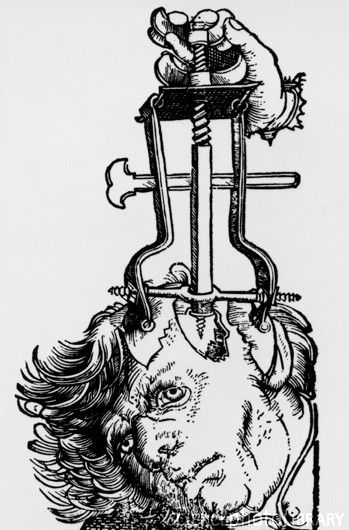
Book of Wound Surgery of Jerome of Brunswick (also called Brunschwig) published 1497, via Science Photo Library, but also ancient enough to skip the legal nonsense.
READ MORE - Stars and storytelling

Giant Asteroid Heading Close to Hit Earth

A giant asteroid weighing 55 million tonnes will just miss the Earth later this year, Nasa experts have predicted.The rock, which is quarter of a mile across, will pass between our planet and the moon in November and will be visible with small telescopes.Robin Scagell of the Society for Popular Astronomy said: “It’s rare we get the chance to see an asteroid up close.”
asteroid,hit earth,earth,image

If it were to hit the earth, the asteroid, named YU55, would have an impact equivalent to 65,000 atom bombs and would leave a crater more than six miles wide and 2,000ft deep.

Passing by at a distance of just 201,000 miles, the asteroid will be the largest object ever to approach the earth so close.

Nasa has officially labelled it a Potentially Hazardous Object, but have stressed there is no danger of impact while on its current course.YU55 orbits the sun every 14 years and last passed the earth in April 2010 at a distance of 1.5 million years.

There are currently 874 near earth asteroids which are considered to be potentially dangerous.

They are closely monitored and the list is being constantly added to as astronomers discover new objects in near space.Scientists estimate that there is usually one large collision with earth every few hundred thousand years.What do you think of this..? Do comments your views.


via: Telegraph
READ MORE - Giant Asteroid Heading Close to Hit Earth

Zooniverse - real science online - great resource


Zooniverse is a very cool project I found out about today. Zooniverse is a collection of "citizen science projects" where citizens contribute to the research and content.

The projects are all about space science: Planet Hunters, Milky Way, Moon Zoo, Solar storms and more. The projects use publicly available information as resources and look for new things about the planets, solar system and more.

The projects are an excellent resource for inquiry based learning in both content and scientific process. There is an education site that has ideas for using Zooniverse in the classroom and there are education resources specifically for the Galaxy Zoo and Solar Stormwatch projects.

There is a huge amount of information and resources available here and they can be used across subjects and grades.


READ MORE - Zooniverse - real science online - great resource

Look up!

The sun burped on Monday--its breath will hit tonight.


Get outside and look up--auroras are possible in this neck of the woods, and possibly as far south as D.C. We have an even better shot tomorrow.

The moon's practically full, so even if we get the show, it may be washed out a bit. But that's OK, that same full moon is opening up tidal flats for dinner on Saturday.

Not often one gets a shot at an aurora and clams in the same week in February.


READ MORE - Look up!

The burning tears of St. Lawrence

The stock market tumbled a bit today.

If I were paying attention, I might release some more stress hormones worrying about retirement. But the plants in my garden grew just the same.

The Federal Reserve is buying more Treasury's, and the sky may be falling.

No matter--tonight the sky is falling, as it has each August, as it will--the Perseids peak. Get outside, look up, and watch pieces of a comet fry as they hit our atmosphere.


Oh, you can look at the purty pictures by National Geographic, and you can blather on about radiants and ZHRs and all kinds of nonsense, but none of that will take you back a few thousand generations as a brilliant bolide breaking across a sky we rarely even notice anymore.

You can feel the oxytocin wash over you as the night's cool air reminds you that we are, after all, part of this world, the real one, the one that will exist long after the words "Dow Jones" fall from our vocabulary.


The Perseid photo is from National Geographic here.


READ MORE - The burning tears of St. Lawrence

Know Astronomy Facts

# When you look at the Andromeda galaxy (which is 2.3 million light years away), the light you are seeing took 2.3 million years to reach you. Thus you are seeing the galaxy as it was 2.3 million years ago.

# Light from the sun takes 8 minutes to reach you, thus you see the sun as it was 8 minutes ago. It might have blown up 4 minutes ago and you wouldn't know about it!

# The Earth is not a sphere! It actually is an oblate spheroid, it is squashed slightly at the poles and bulges out at the equator due to its rotation.

# Spare a thought for the constellations that never made it into the official list... these include Machina Electrica (the electricity generator), Officina Typographica (The Printing Office), and Turdus Solitarius (the solitary thrush)

# When Galileo viewed Saturn for the first time through a telescope, he described the planet as having "ears". It was not until 1655 that Christian Huygens suggested the crazy theory that they might be an enormous set of rings around the planet.

# If you could put Saturn in an enormous bathtub, it would float. The planet is less dense than water.

# A teaspoon-full of Neutron star would weigh about 112 million tonnes.

# Jupiter is heavier than all the other planets put together.

# Even on the clearest night, the human eye can only see about 3,000 stars. There are an estimated 100,000,000,000 in our galaxy alone!

# The tallest mountain in the solar system is Olympus Mons, on Mars at a height of about 15 miles, three times the height of Mount Everest. It covers an area about half the size of Spain.

# If the sun were the size of a dot on an ordinary-sized letter 'i', then the nearest star would be 10 miles away.

# Half-a-billionth of the energy released by the sun reaches the Earth

# Temperatures on Venus are hot enough to melt lead.

# If you could travel at the speed of light (186,000 miles per second) it would take 100,000 years to cross our galaxy!

#
Only one side of the moon ever faces Earth. The moons period of rotation is exactly the same as it's period of orbit.

# Betelgeuse, the bright star on Orion's top-left shoulder, is so big that if it was placed where the sun is, it would swallow up Earth, Mars and Jupiter!

# If you stand on the equator, you are spinning at about 1,000 mph in as the Earth turns, as well as charging along at 67,000 mph round the sun.

# On the equator you are about 3% lighter than at the poles, due to the centrifugal* force of the Earth spinning.

# The atmosphere on Earth is proportionately thinner than the skin on an apple.

# On Mercury a day (the time it takes for it to spin round once) is 59 Earth-days. Its year (the time it takes to orbit the sun) is 88 days- that means there are fewer than 2 days in a year!

# If a piece of the sun the size of a pinhead were to be placed on Earth, you could not safely stand within 90 miles of it!

# Its estimated that the number of stars in the universe is greater than the number of grains of sand on all the beaches in the world! On a clear night, we can see the equivalent of a handful of sand.

# Every year the sun evaporates 100,000 cubic miles of water from Earth (that weighs 400 trillion tonnes!)

# Jupiter acts as a huge vacuum cleaner, attracting and absorbing comets and meteors. Some estimates say that without Jupiters gravitational influence the number of massive projectiles hitting Earth would be 10,000 times greater.

# Astronomers believe that space is not a complete vacuum- there are three atoms per cubic metre.

# Saturn is not the only planet with rings- Neptune has it's own ring system.


This are the few of million facts known and billion facts still unknown...
READ MORE - Know Astronomy Facts

This life more 'tweet....

Now, my co-mates and brothers in exile,
Hath not old custom made this life more sweet
Than that of painted pomp?....
And this our life, exempt from public haunt,
Finds tongues in trees, books in the running brooks,
Sermons in stones, and good in everything.

Duke Senior, As You Like It
Shakespeare, natch
***

Tweet:

I'm diddling away my mortal coil here instead of staring at stars. Which reminds me--I need to go stare at some stars....


And then I hung around for another 15 minutes before I got out.

I'm glad I got out--a golden meteor streaked across the sky as though painted with glitter, sparks flying off the tail, a tail that extended more than half the sky. It shook me up.

I have never regretted a single moment spent outside. I've regretted plenty inside. If I believed in signs, I'd toss this machine off the kayak....

***


In the past couple of days I've heard two croakers complain as I wrestled hooks out of their jaws, squinched a few dozen cabbage worms, burned my feet on a hot jetty, cooled those same feet in the bay, picked tomatoes and beans, sliced open my finger, dared a harlequin stink bug to stink, stared at Vega and Venus, sank ankle deep into sand at the sea's edge, and watched tiny fish break the surface in an explosion of red light reflected from the setting sun.

***

My fledgling story:

I went into the garage just after supper yesterday to fetch the paddles. Some critter was flapping around noisily, but I was too busy running away to see it. (Yes, I'm a coward....)

A few minutes later, Leslie (much braver than me) found it--a fledgling robin, now exhausted, its beak gaping open, its chest billowing. The fledgling found a window--it could see the outside world, and it kept beating against the glass, its wings sprawled open against the pane.

Just a few feet away, the open garage door beckoned, but the bird was too frightened to see anything but its view from the window. It would die waiting for the pane to dissolve.


With the help of a crab net, I managed to get the bird out onto a juniper bush by the garage. I feared it would collapse from exhaustion. I cooed (ridiculous, I know) and slowly brought a hose to its mouth.

The robin drank. Then it drank some more.

In a few minutes it was gone.

***

As one who has trouble believing anything, not sure now's a good time to start putting trust in "signs"--but I do know this much. This computer screen is my garage window. I keep staring into it, looking at a world through glass, glass that cannot be broken, glass that will not magically dissolve.

No matter how much I tweet like the desperate fledgling.


Photos are ours, and we gave ourselves permission to use them.
READ MORE - This life more 'tweet....

Microsoft Research Worldwide Telescope


WorldWide Telescope (WWT) enables your computer to function as a virtual telescope, bringing together imagery from the best ground and space-based telescopes in the world. Experience narrated guided tours from astronomers and educators featuring interestingplaces in the sky.
A web-based version of WorldWide Telescope is also available. This version enables seamless, guided explorations of the universe from within a web browser on PC and Intel Mac OS X by using the power of Microsoft Silverlight 3.0.

Note: The web-based version will ask for more local storage (about 40MB), but that shouldn't be a problem for anyone.

You can just explore the skies by location, constellations, planets, stars, and more. You can select from digitized skies, ultra-violet, and more. You can even look at earth!

There are also guided tours available. These were set up by astronomers and researchers and are very well designed and informative. The guided tours include galaxies, planets, stars, Apollo missions, Mars missions, and much more.

The earth at night view is great to use to show students where the most lighted areas are. The United States and Europe are the brightest areas at night (Japan is pretty bright too).

I had way too much fun playing with this today. I think that this would be a great resource for science classes to show our solar system and galaxy.


READ MORE - Microsoft Research Worldwide Telescope

Space invaders!


It's February.
Snow is racing by the window sideways.
I'm transmogrifying into a psoriatic komodo dragon.


Time for a curmudgeonly crankfest!


Candidates:
Fluoridating public water supplies with industrial waste.
Stuffing fertilizers with industrial waste.
Mandating HPV vaccines for school.
Letting coddled clueless elitists corporatize our public schools.
Spending billions on banks.


And the winner is....

SPACE INVADERS FROM PLANET X!


Now here's something for my students to chew on!

The Hubble Telescope shows us an obvious alien ship, and NASA wants us to believe it's the remnants of a recent asteroid collision.

(It would be a fun exercise to spring in science class--form hypotheses as to just what we're seeing. It wasn't until my grandfather was in his twenties that astronomers accepted that the Andromeda nebula was a separate galaxy.)


AP claims credit for the photo, but they're full of poop--
Hubble took it, I helped pay for Hubble, its our photo.

READ MORE - Space invaders!

An informal lesson


Autumn gets serious now.


Dark.
Dark.
More dark.


Here's something you can do with your children to help them see the world. You need nothing but normal vision and a clear sky.

*Find Polaris, the North Star, at 7 P.M. It's not as bright as you might think, but it's there, and it's special, as your child can discover in just an evening.

*Find Aldebaran, the Eye of the Bull, the Eye of Revelation. 5,000 years ago it rose in March, now it rises in November. This, of course, our child cannot see, so do not trouble her with it.

What she can see, though, is that the eye of the bull moves across the evening sky. In an hour or so, it will have creeped a bit across the sky, following the path of our closest star--she might have noticed even if the adults around her do not.

Now ask her to look at the North Star--it sits stubbornly in its spot, the universe seemingly rotating around it.

She might ask why, she might not.

If she doesn't, don't push it.

She's already gotten more science education in an hour than she may get in my classroom in a week. Or two.

Science starts with observation, and it starts outside. Trying to do astronomy inside is like trying to make gold from tin.

Alchemists were seriously bright people earnestly trying to make a precious metal for all the wrong reasons. Alchemy has since been discredited.

Science teachers may be headed for the same fate.


The illustration was originally from John Flamsteed's star atlas,
revised by J Fortin in 1776, available online via the
Linda Hall Library of Science, Engineering, and Technology, Kansas City, Mo.

READ MORE - An informal lesson

Bloomfield's sidewalk astronomers catch a galaxy

I advise the Bloomfield High School Astronomy Club--we are sidewalk warriors, fighting the glare of streetlights, security beacons, and gaudy church steeples. A few times each night flashing emergency lights roar past us a few feet away.

We live under 3 runway lengths from Newark Liberty International Airport. (To be fair, runway 4L/22R is about two miles long.) One of our games is called "catch the plane"--students attempt to get the plane in the telescope's field of view, not as easy as it sounds when you're just a few miles from the airport.

I get a handful of kids every clear Tuesday night, chasing Jupiter and the few stars we can see naked eye. Even with the light pollution, though, a peek through an 8" scope changes their view of their universe.

We finally caught the Andromeda Galaxy a few days ago, using an 8" telescope on a manual mount. We have a computerized mount somewhere, but I keep pretending I don't know how to use it. The budding astronomers are getting to know the sky the old-fashioned way, which is to say, they are getting to know the sky.
***

I've been covering cell energetics the past few weeks. How does life get its energy, its "stuff"? I have a time-line in the classroom, a meter for ever billion years.

(OK, the time-line stops at 4.5 billion years ago, just short of Earth's birthday, but I've swept along the imaginary portion of the time-line so many times I'd bet you'd get a dozen kids to testify times that we have a time-line that goes back 14 billion years or so. I really need to get another roll of paper.)


I start at the beginning. I call it our creation story, and it is a story. It has a name--Big Bang model. I'm careful not to call it a theory.

How do we know, Dr. D?
Well, we know this much. The visible galaxies around us keep going farther and farther away. Where will they be next week?
Farther.... (It's amazing to hear kids roll their eyes with their voices)
Where were they last week?
Well, doh, closer
Last year?
A thousand years ago?
A billion years ago?

And they get it, at least they get the impetus for the model. It's our creation story.

I speak carefully, but the words are the right ones--it is a creation story. It's a model. It's a good one, but by acknowledging that we cannot know as a fact (apparently the gold standard in sophomore debate) the origins of our universe keeps their own creation myths safe.

For most of my students, Genesis is the myth they believe in, but most of them could tell you as much about Genesis as they could the Big Bang model. I've taught both, but never in the same place. They're both useful stories. They're both human stories.

Neither explains why an apple tastes so good.
***

The Andromeda galaxy is the only object beyond our galaxy we can see naked eye.

First time I saw it without glass was a week before Hallowe'en, many years ago, right after we took our two youngsters on a haunted hay ride in the Jersey skylands. It hung out there even beyond the stars, a puff of fine mist hovering beyond my known universe.

You will not see Andromeda without a scope in Bloomfield.

When we did find it, we saw an oval smudge. I worried that the kids may feel let down, and started to pontificate about how long it took the light to go from that smudge to our eyes.

I should have stayed quiet--they thought it was cool. They kept going back to look at it.

Besides, turns out I couldn't remember exactly how far the galaxy is--I thought it was a bit over 3 million light years away, but the experts changed their minds and calculated it to be "only" 2.5 million light years away.

And that's the point.

My grandfather was in his late 20's before Edwin Hubble convinced other astronomers that these blobs of stars lay outside our own galaxy. That wasn't so long ago.

And it's hubris to think any of us can know the difference between 2.5 and 3.2 million light years.

***

Cosmology rests on light. Cosmologists study light in its various forms, but unlike biologists, have no need for their noses, for their skin. Cosmologists work with the intangible.

Our modern creation story has been written by a very few men with very big brains who trust their eyes more than their tongues. It is thus written.

The Big Bang model, like Genesis, is ultimately incomprehensible. It's important that my kids know this, at least about the cosmological models. I leave Genesis to their parents.

Once science becomes known "as a fact", once it becomes frozen in mythology, it becomes useless.

Even worse, it becomes boring.
READ MORE - Bloomfield's sidewalk astronomers catch a galaxy

*whew*


2009 DD45 is a newly discovered asteroid, about the size of a large house, and it's zipping really close by today. Unlike Dorothy's house that took out the Wicked Witch, however, an asteroid this size can make a reasonable dent in the local population should it hit Earth square on.

This one will get a blip in the news, and most folks busy with more important matters (is Nike really cooler than Reebok?) will miss it entirely.

So here's the real news. Somewhere out there, possibly thousands of years away, possibly only months away, is a huge asteroid with our name on it.

We know of one reasonably large rock, 2004 MN4, scheduled to careen a bit close in 2029 (and was once predicted to have a 1-in-37 chance of hitting), but now it looks like we're going to dodge that one, at least until 2036, and even then it's unlikely (1 in 12.3 million).

MN4 is aptly named Apophis, the Egyptian god of darkness and nihilism, the enemy of Ra, the sun-god.

But there's another one that will destroy most life on this planet--the ancient Egyptians knew this was possible when they conceived Apophis. We haven't found it yet. Still, it's there, coldly rotating on an elliptical orbit, and it will hit us.

When the big one comes, it's going to take out a lot of humans. The odds of dying in by asteroid are about 1 in 200,000 (give or take a magnitude). You're slightly more likely to die by a dog attack, and less likely by a fireworks accident or a tsunami. (At least according to LiveScience.)

Ah, but the stress worrying about this is most likely to finish you off--heart attacks remain the number one cause of death in the United States.


The cartoon is from NASA--no worries.
READ MORE - *whew*